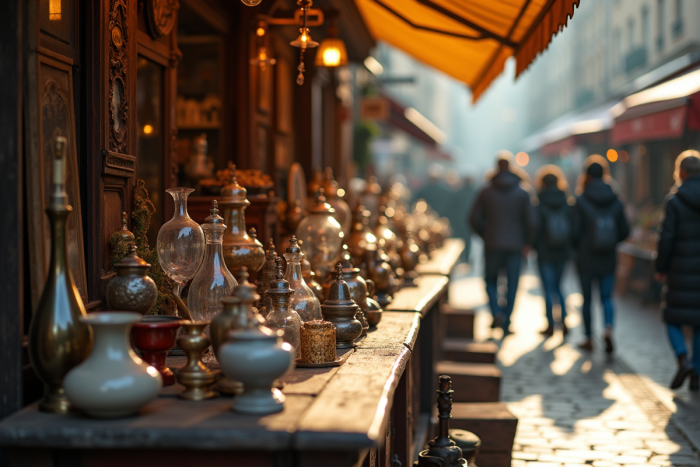
In Paris, some markets only allow transactions between professionals before dawn, then open their stalls to the public a few hours later. The calendars of flea markets vary by district, changing the map of places to discover each week. Renowned neighborhoods regularly change the dates of their events to avoid competition, while some addresses only accept cash payments, with no price displays.
Where to find treasures in Paris: an overview of iconic flea markets and markets
The art of treasure hunting in Paris is expressed in a variety of places, each with its own atmosphere and regulars. At the Puces de Saint-Ouen, a city within a city, over three thousand merchants display treasures and anecdotes across several markets. The Biron market is full of precious antiques, while the Vernaison market attracts with its variety of stalls, from vintage trinkets to unexpected items. Design enthusiasts flock to the Paul Bert market, where iconic pieces and sharp finds coexist. As for the Dauphine market, it becomes the playground for vinyl collectors and curious seekers of rarities. Finally, the Malik market stands out for its energy, navigating between vintage fashion and hidden gems.
For those who prefer intimacy, the Puces de Vanves in the 14th arrondissement offer a more subdued atmosphere. Here, small furniture, collectibles, and trinkets take center stage, in an environment conducive to morning exchanges among connoisseurs. The Clignancourt market remains an essential reference for anyone wishing to explore a universe combining antique furniture, decorative arts, and unusual finds, as detailed on the Clignancourt flea markets page: what are the best?
Further south, the Georges Brassens Old and Used Book Market gathers a crowd of literature enthusiasts and rare edition hunters every weekend. But Paris is not limited to its major addresses: the Abbesses flea market vibrates through the streets of Montmartre, while ephemeral stalls set up along rue de Bretagne or by the Canal Saint-Martin as the seasons change. Each place tells a story, and much more than mere objects are shared.
Tips and tricks for smart treasure hunting in the capital and finding the rare gem
Treasure hunting in Paris requires as much anticipation as flair. Enthusiasts never venture randomly: it all starts with a thoughtful selection of addresses, based on desires and upcoming events.
To guide you, here are some useful landmarks based on your interests:
- The Puces de Saint-Ouen for antiques lovers
- The Abbesses flea market if you seek the spirit of Montmartre
- The Georges Brassens Old and Used Book Market dedicated to rare books
A piece of advice worth its weight in gold: get up early. The best finds are gone as soon as the doors open, exchanged among insiders before the general crowd arrives.
Negotiation is part of the game. At each stall, it’s about establishing a real dialogue, listening to the story behind the object. Ask the seller about the origin of a chair, the history of an old ring. Connoisseurs know: the more you show interest, the more you learn. The habit of handling, comparing, and questioning gradually shapes a discerning eye.
What truly distinguishes flea markets in Paris is this human dimension: each purchase becomes an act of responsible consumption. Giving a second life to a forgotten vinyl, an art deco lamp, or a vintage jacket means placing your gesture in a continuity and keeping the memory of the streets alive. The unique objects discovered, whether they are trinkets, antique furniture, hard-to-find books, or clothes marked by their era, make each expedition unique, rich in encounters and surprises.
In this city where the past dialogues with the present on every stall, treasure hunting becomes much more than a hobby: it is a quest, sometimes a revelation, always an adventure in its own right.