Hawaii is home to a flora where a remarkable proportion does not exist anywhere else on the planet. This geographical isolation, in the middle of the Pacific, has produced unique plant lineages on each island of the archipelago. Hawaiian flowers are not just limited to the welcome leis distributed in Honolulu: they tell a story of evolution, vulnerability, and now, active protection.
Floral Endemism in Hawaii: What Geographical Isolation Has Produced
The Hawaiian archipelago is one of the most isolated territories on Earth. This distance from any continent has fostered a spectacular adaptive radiation: from a few colonizing species that arrived by wind, ocean currents, or birds, hundreds of distinct flowering plants have evolved locally.
The result is a rate of endemism among the highest in the world. The majority of native flowering plants in the archipelago do not grow on any other land. Each island, from Oahu to Maui to Big Island, features different microclimates and volcanic soils that have shaped species unique to specific valleys or ridges.
To better understand the beauty of Hawaiian flowers, one must look beyond the yellow hibiscus (the official state flower) and take an interest in the silverswords of Mauna Kea’s heights or the lobeliads of the wet forests, lineages that have no continental equivalent.
Iconic Species of the Islands: Hibiscus, Plumeria, and Silversword
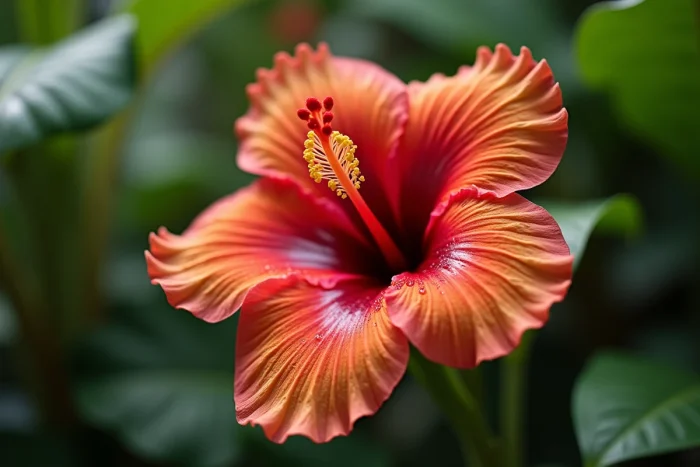
The brackenridgei hibiscus, an endemic yellow variety, is the state flower of Hawaii. In contrast, the plumeria (frangipani), ubiquitous in leis and gardens in Waikiki, is not native to the archipelago. It was introduced from Central America. This distinction between native and introduced species is at the heart of understanding Hawaiian flora.
Among strictly endemic species, the silversword (or ‘ahinahina) holds a special place. This silver-leaved plant grows in high-altitude volcanic craters, particularly in Haleakala National Park on Maui. It only blooms once in its lifetime, then dies. The silversword illustrates the fragility of ultra-specialized species: its restricted habitat makes it vulnerable to any disturbance.
The Hawaiian lobeliads form another remarkable group. Some reach the size of small trees, a rare phenomenon in this botanical family. Their tubular flowers, often curved, have co-evolved with endemic pollinator birds that are now themselves threatened.
Introduced Flowers and Contemporary Landscapes
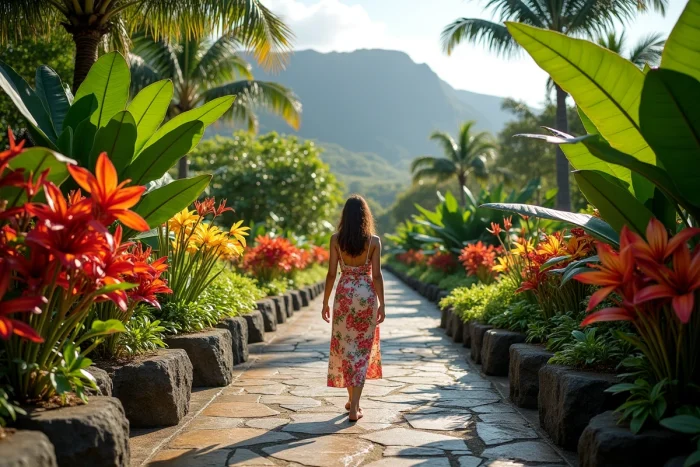
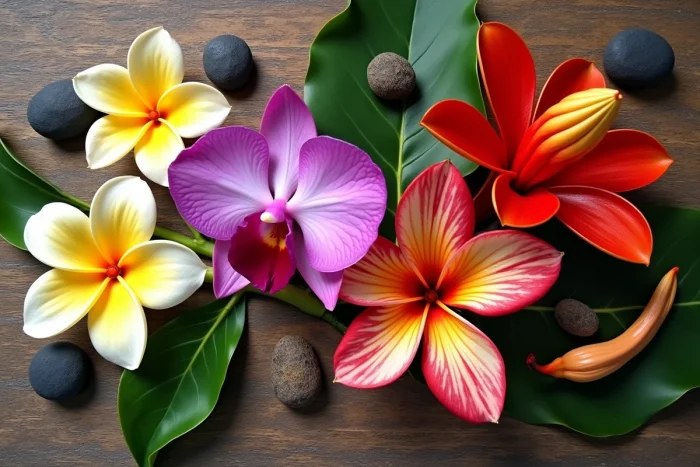
The gardens of Honolulu, the white sandy beaches of Oahu, and the hotel complexes of Maui primarily showcase imported species: tropical orchids, bougainvilleas, bird of paradise, anthuriums. These flowers compose the tourist image of the archipelago, but they obscure the local botanical reality.
The flora visible to travelers is mostly non-native. Introduced species, sometimes invasive, exert direct pressure on the habitats of endemic plants by colonizing the understory and clearings where they once thrived.
Conservation of Hawaiian Flowers: Concrete Threats and Protection Framework
Hawaiian botanical institutions have gradually shifted the discourse on the flowers of the archipelago: it is no longer just about aesthetics, but about the survival of species. Several dozen endemic flowering plants are listed as threatened at the federal level in the United States.
The main threats are well identified:
- Invasive plants, such as miconia or certain African grasses, which choke native vegetation in wet forests and high-altitude meadows
- Habitat destruction due to urban and tourist development, particularly on Oahu around Honolulu
- The disappearance of endemic pollinators (birds, insects), which disrupts reproduction chains that are millions of years old
Without an appropriate pollinator, some species can no longer reproduce even if their habitat is preserved. This co-extinction problem remains a challenge for conservation programs.
Eco-Tourism and Management of Botanical Trails
Nature tourism in Hawaii is increasingly regulated. Access to certain trails crossing areas with high densities of rare species is now limited or requires reservations, particularly in the national parks of Big Island and Maui.
This approach aims to reduce trampling of fragile volcanic soils and the accidental spread of invasive seeds by hikers’ shoes. Eco-tourism practices in Hawaii directly target the preservation of sensitive environments, not just the quality of the visitor experience.
The available data do not yet allow for measuring the long-term effectiveness of these restrictions on the regeneration of endemic plant populations. Field reports vary on this point depending on the islands and ecosystems involved.
Hawaiian Flowers Beyond the Archipelago: Exhibitions and International Floral Scenography
Hawaiian flowers are gaining new visibility in an unexpected realm: floral scenography at international exhibitions. Events dedicated to floral art now use Hawaiian tropical varieties as visual references and materials for creation.
This phenomenon shifts the perception of these flowers. They are no longer confined to the realm of travel and exoticism. They become design objects, studied for their shapes, textures, and colors in a professional decorative context.
The use of Hawaiian flowers in international floral art paradoxically helps raise awareness among an audience distant from the archipelago about tropical biodiversity issues. The scenographers working with these varieties increasingly mention their conservation status.
The exotic diversity of Hawaii’s flowers relies on a fragile balance between volcanic geology, oceanic isolation, and recent human pressures. The archipelago remains a living laboratory to observe how unique species are born, adapt, and sometimes disappear.