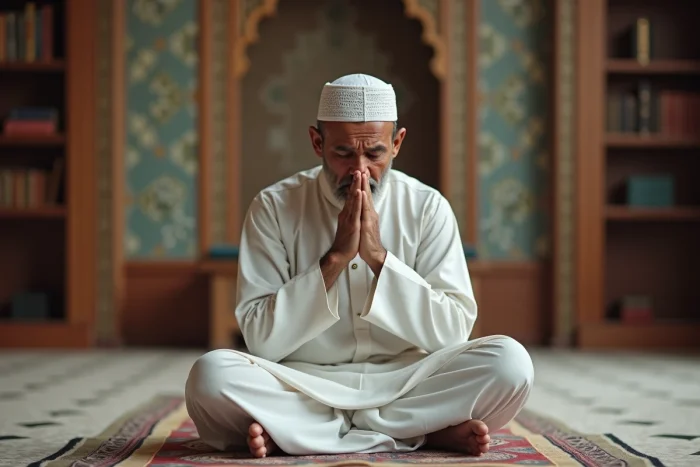
Yawning during prayer? This gesture, with its appearance of an innocuous reflex, raises suspicion and multiple interpretations. According to certain religious traditions, this simple movement would betray much more than a hint of fatigue. In Islam, for instance, yawning at the heart of worship awakens vigilance, questions the quality of presence, and reminds the faithful of the existence of influences that should not be underestimated.
Specific prescriptions outline how to react to this uncontrollable gesture. Religious texts, as well as advice from practitioners, encourage adopting specific attitudes to navigate these moments without faltering. It is not just a matter of discipline, but of paying attention to the invisible dimension of prayer: staying alert, leaving nothing to chance.
Why do we yawn during prayer? Between physical explanations and spiritual beliefs
The yawn during prayer is primarily explained by biology. Fatigue, nervous tension, a heavy digestion, or even an overheated room open the door to this universal reflex. In the fervor of a collective moment, yawning spreads, almost inevitably, from one worshiper to another. It sometimes signals a decrease in attention, weariness, or simply an unmet need for sleep. The body, in its way, protests against accumulated tension or prolonged wakefulness.
But the spiritual interpretation goes further. Many religious traditions, such as Islam or Christianity, view yawning as a breach in concentration, even an invitation to examine one’s own involvement in the act of praying. For some, it is an alarm signal, a gap in vigilance that deserves to be filled. Pastor Marc Pernot, for example, recommends integrating rituals to strengthen self-presence, while practices like Christian meditation or lectio divina place refocusing at the heart of the spiritual journey.
In the realm of yoga, the meaning of yawning takes another turn: it becomes a manifestation of vayu, a subtle energy called Devadatta, sometimes seen as a “gift from the gods.” The Karnamudra gesture, used to intentionally trigger yawning, symbolizes the transition between two states of consciousness. To the question why do I yawn during prayer, the answers oscillate between physiology, symbolism, and spiritual quest.
Ultimately, yawning emerges as a revealer of the link between body, mind, and inner life. It acts as a signal: stay attentive, adjust your commitment, and understand the role of the collective in the dynamics of prayer.
The evil eye in Islam: myth or reality behind yawning?
In Islam, yawning during prayer does not leave anyone indifferent. Several accounts attributed to Abou Houreira or Abû Saîd Al-Khudrî link this spontaneous gesture to the action of Shaytan, the figure of the demon, who seeks to divert man from his concentration. Sneezing, on the contrary, delights the angels: yawning, however, would be a breach, a relaxation of vigilance and a mark of disrespect towards Allah.
Scholars like Ibn Hadjar al-‘Asqalânî or An-Nawawi remind us of the importance of self-control. According to the sunnah, one should suppress yawning as much as possible and, if necessary, cover one’s mouth with the hand. This gesture, far from being trivial, manifests the will to protect oneself from negative influences. Yawning, in this perspective, acts as a reminder to reinforce concentration, preserve the sincerity of worship, and avoid the dispersion that threatens every believer, even in the sacred moment of prayer.
As for the notion of the evil eye, it circulates strongly in popular discourse. Some see it as a sign of jealousy or witchcraft, but the texts are more nuanced: yawning is a universal phenomenon, it is not systematically linked to external malice. The challenge for the faithful remains to control this reflex to preserve the intensity of the connection with the divine.
Yawning is therefore neither a mere automatism nor a pure symbol of weakness. It becomes a true spiritual indicator, an invitation to strengthen one’s inner state through invocation, protection, and repentance, to maintain divine blessing and support.
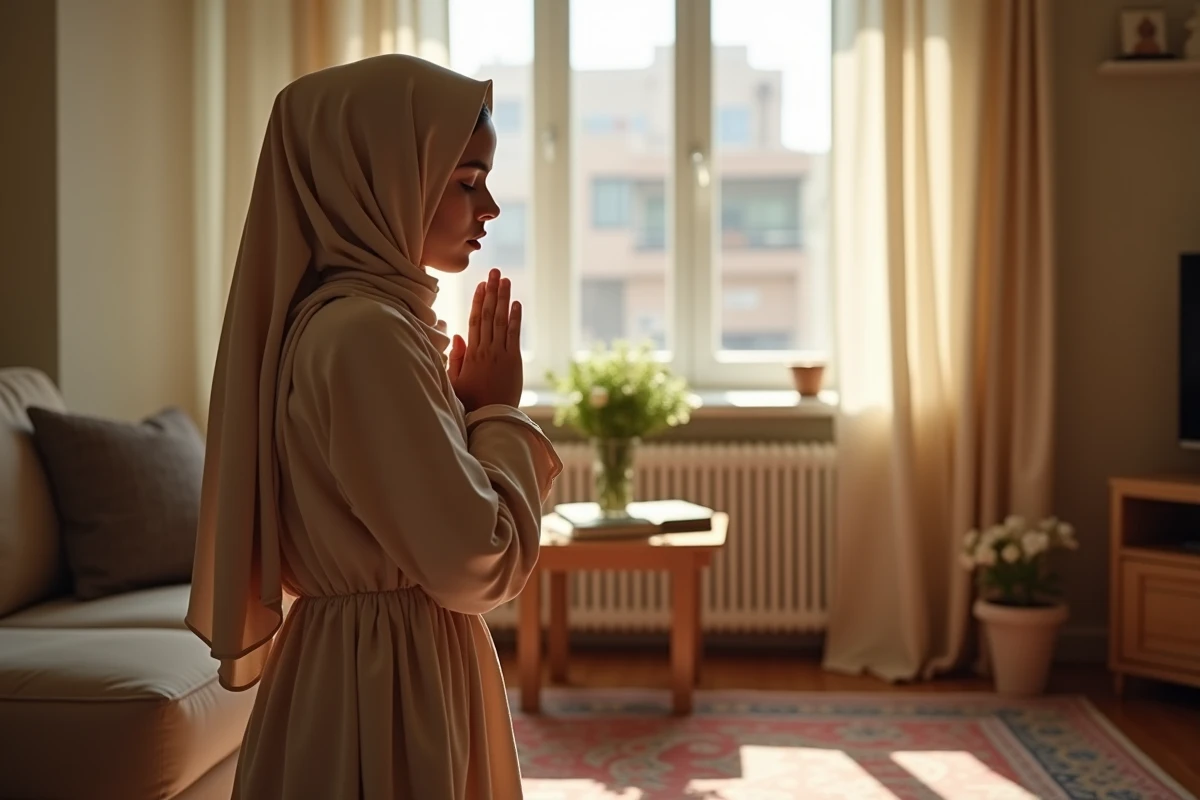
Concrete advice to protect against the evil eye and preserve spiritual concentration
In the face of yawning during prayer, it is advisable to adopt a few reflexes. Physical and mental preparation proves valuable: getting enough sleep, taking a short nap if needed, monitoring the lightness of meals before the service. Choosing a well-ventilated, temperate place away from distractions also supports concentration and inner elevation.
Discipline in prayer makes a difference: reciting aloud, pacing the reading, investing each word with the heart. The dhikr, a constant invocation and remembrance of the divine, helps to refocus, while listening to or reading the Quran brings calm and protection.
Here are some simple and effective practices to integrate to minimize yawning and strengthen self-presence:
- Adopt a deep and regular breathing to stabilize attention.
- Mentally refocus as soon as a yawn occurs, even fleetingly.
- In case of persistent trouble, invoke divine protection as recommended by religious teachings.
Trusting one’s commitment and cultivating a positive attitude also proves beneficial: each prayer then becomes an opportunity for heightened vigilance, a victory over distraction. Yawning, far from being a mere inconvenience, reminds us of the demand for constantly renewed attention. Preventing fatigue and seeking blessing allows one to experience prayer with complete sincerity, with a renewed intensity at every moment.