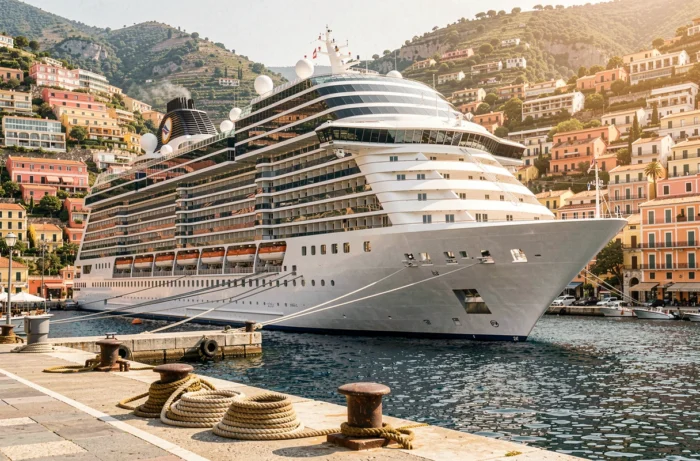
Cruise tourism has reached a quantitative milestone that redefines its place in the travel industry. With 37.3 million passengers recorded in 2025 according to CLIA, the growth far exceeds a simple post-pandemic rebound. How is this sector structured, and what gaps distinguish its different segments?
Growth of Cruise Tourism: Data That Positions the Sector
The progression between 2024 and 2025 represents a leap from 34.6 to 37.3 million cruisers, an increase of nearly 8% in one year. To better understand this trajectory, a look back at the available orders of magnitude allows us to measure the acceleration.
| Period | Number of Cruisers | Observation |
|---|---|---|
| 1970s | 500,000 | Emerging market, primarily North American |
| 1998 | About 8 million | First large-capacity cruise ships |
| 2023 | Over 31 million | Exceeding pre-Covid levels |
| 2024 | 34.6 million | Confirmed acceleration |
| 2025 | 37.3 million | Historic record (CLIA, 2026 report) |
The number of global passengers has therefore increased by more than seventy times in half a century. This pace can be explained by the diversification of itineraries, the broadening of the customer base, and the increase in ship capacity, which can accommodate thousands of people.
About 90% of passengers surveyed by CLIA say they want to go on another cruise, an unusually high loyalty rate in the tourism sector. This figure directly impacts the visibility of the order books of companies.
To better understand what this mode of travel precisely encompasses, the official site of La Petite Pierre details the definition and contours of cruise tourism in an accessible file.
Profile of Cruisers: A Measurable Youthfulness
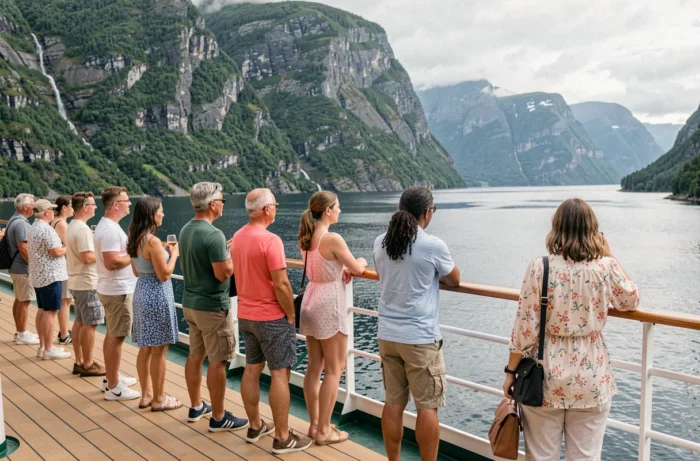
The image of cruise tourism long associated with a retired clientele no longer corresponds to the reality of the market. CLIA notes a clear increase in demand from younger travelers and multigenerational groups.
Three segments drive this diversification:
- Expedition cruises, which attract travelers seeking polar or remote destinations, far from the giant cruise ship model
- Adult-only cruises, positioned on a premium level with ships of reduced capacity
- Multigenerational products, designed to bring families and friends together with spaces and activities differentiated by age group
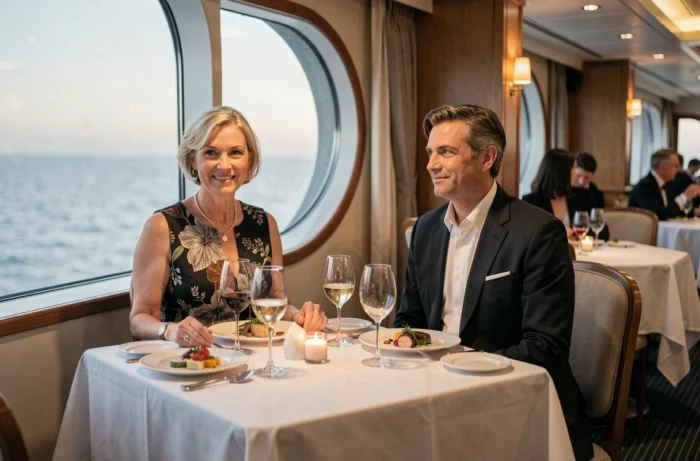
This shift in clientele modifies the onboard offering. Companies are investing in gourmet dining, wellness spaces, and cultural programs, where ships from the 1990s focused on shows and casinos.
Carbon Regulation and Impact on Cruise Prices
Since January 2024, maritime transport is gradually integrated into the European Union Emissions Trading System (EU ETS). Passenger ships over 5,000 gross tonnage, which includes almost all cruise ships, are affected.
At the same time, the FuelEU Maritime regulation, applied since 2025, imposes a gradual reduction in the greenhouse gas intensity of the energy used onboard. These two European measures create simultaneous pressure on operating costs.
The concrete effects manifest in several ways:
- An increase in the cost per passenger, as companies pass on part of the emission quotas in ticket prices
- An accelerated investment in liquefied natural gas (LNG), emission reduction technologies, and shore power connection systems
- A reorientation of certain itineraries to optimize fuel consumption, with closer stops in the Mediterranean or Baltic
The share of traditional heavy fuel oil (HFO) in powering cruise ships has already declined. These regulatory constraints could accelerate the price segmentation between budget cruises and premium low-impact journeys.
Luxury and Expedition: Two Expanding Segments
The luxury cruise market is experiencing structural growth driven by demand for smaller ships, exclusive itineraries, and highly personalized services. Luxury represents the fastest-growing segment of the sector, according to available analyses.
Expedition cruises, which sail to Antarctica, the Arctic, or less frequented archipelagos, sit at the intersection of luxury and adventure. They typically carry fewer than 500 passengers and have reinforced hulls for icy waters.
Navigational Basins: Mediterranean and Caribbean Facing New Routes
The Mediterranean remains the primary historical cruise basin in Europe, with a climate allowing for nearly year-round operation. The Caribbean dominates the North American market. In contrast, Asia and South America are capturing an increasing share of the global fleet, driven by the emergence of new local clientele.
The polar regions constitute the geographical frontier of the sector. Antarctica, in particular, attracts a growing number of expedition ships, raising questions about environmental regulation in fragile ecosystems.
Cruise tourism operates as an integrated product: transport, accommodation, dining, and excursions are bundled into a single package. This integration, combined with the diversity of navigational basins, explains why the sector withstands economic fluctuations better than other tourism segments.
The key takeaway remains the 90% loyalty rate reported by passengers. As long as this figure holds, the pressure on shipbuilding and port infrastructure will not weaken, regardless of the evolution of the European regulatory framework.